Lunch at Greek restaurants
 Save
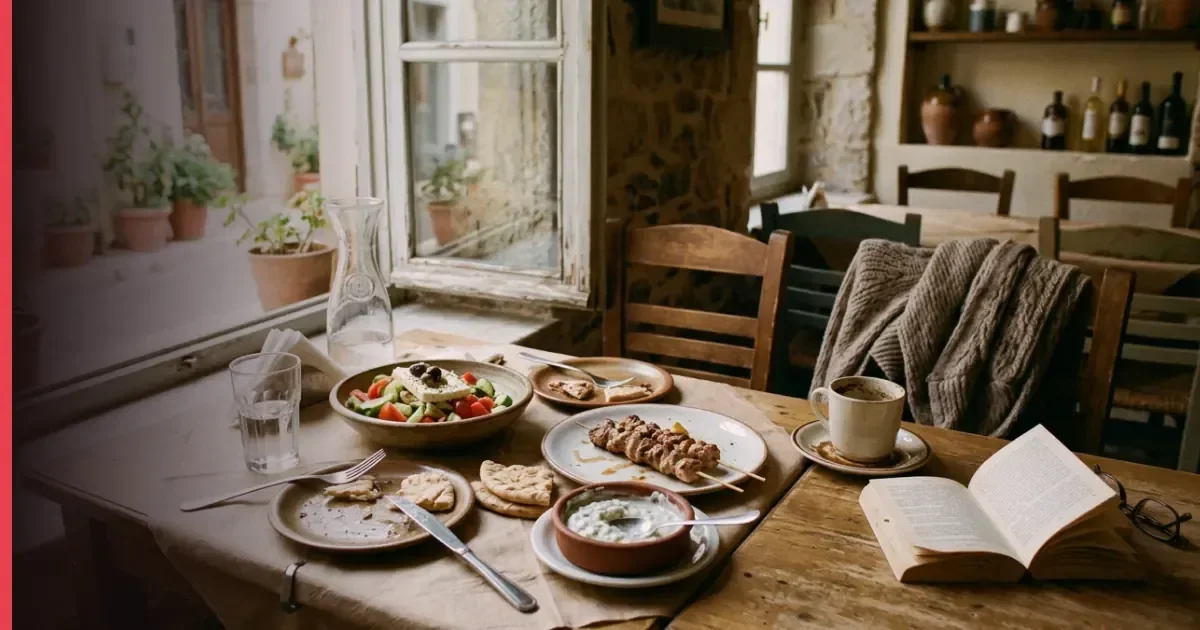
Greek lunch sits between the quick sandwich and the long evening meal. Delphi Restaurant explains what changes on the menu, how portions shift and which dishes work best when you need something satisfying but not heavy in the middle of the day.
Timing and pace
Greek restaurants in the UK often open for lunch between noon and three. The meal moves faster than dinner—most diners finish within an hour. Tables turn more quickly, and the atmosphere stays brighter and more functional.
In Greece itself, lunch was traditionally the main meal, eaten after the morning's work and followed by a rest. That pattern has faded in cities, but the menu still reflects it: substantial dishes that sustain without requiring a long sit-down.
Mezze and smaller plates
Lunch menus lean toward mezze. Tzatziki, taramasalata, melitzanosalata and hummus arrive with warm pitta, and two or three small plates often make a complete meal. Dolmades—stuffed vine leaves—work well at midday because they are light but filling.
Feta and olives appear on almost every table. Some kitchens serve them together as a simple starter; others fold them into a Greek salad with cucumber, tomato, red onion and oregano. The salad becomes the centrepiece rather than a side when paired with bread.
Fried items such as courgette fritters or saganaki—pan-fried cheese—are popular at lunch because they are quick to prepare and need no cutlery. Eat them while they are hot; they lose texture as they cool.
Hot dishes for midday
Grilled meats and fish suit lunch when you want something more than mezze. Souvlaki—skewered pork, chicken or lamb—comes with pitta, salad and sometimes chips, and the portion is manageable. Grilled octopus or calamari work the same way: enough protein to satisfy, not so much that you feel slow afterward.
Baked dishes are less common at lunch because they take longer and tend to be richer. Moussaka and pastitsio are better suited to evening service. Some kitchens offer a single tray-baked option that was prepared in the morning, served warm rather than hot.
Stews such as stifado or kleftiko occasionally appear on lunch menus, especially in cooler months. They reheat well and develop flavour overnight, so a kitchen that made them the previous day can serve them quickly.
Ordering for one or two
Greek meals are usually shared, but lunch service accommodates solo diners more easily. A single mezze, a piece of grilled fish and a side of horta—boiled greens—make a balanced plate without needing others at the table.
For two people, order three or four mezze and one hot dish to split. That gives variety without overwhelming the table. If you want bread, ask for it at the start; some places bring it automatically, others wait until you request it.
Portions at lunch are sometimes smaller than at dinner, though not always. If the menu does not specify, ask. A full moussaka portion intended for evening service can be too much in the middle of the day.
Drinks and dessert
Water—still or sparkling—is standard. Greek coffee appears less often at lunch than at dinner, though some restaurants serve it throughout the day. If you want it, order after the meal; it signals the end rather than the beginning.
Wine by the glass is available, but fewer diners choose it at midday. Beer, particularly a light lager, pairs better with the pace of lunch. Soft drinks and fresh lemonade are common.
Dessert menus shrink at lunch. Baklava and galaktoboureko—custard pie in filo—may be offered, but many diners skip them. Greek yoghurt with honey and walnuts is a lighter option when the kitchen has it.
Choosing a restaurant for lunch
Check whether the kitchen uses the same menu all day or runs a shorter lunch list. A dedicated lunch menu usually means faster service and dishes designed for midday eating. If the full dinner menu is available, you will have more choice, but preparation may take longer.
Look at the mezze selection first. A restaurant with five or six options prepared fresh each morning is likely handling lunch well. If the hot dishes are all large baked or slow-cooked items, the kitchen may be better set up for evening service.
Proximity to your starting point matters more at lunch than at dinner. A twenty-minute walk is manageable in the evening; at midday, when time is limited, closer is better. Check opening hours before you leave—some places close between lunch and dinner, and a few open only in the evening.
Frequently asked questions
What time do Greek restaurants in the UK typically serve lunch?
Most open for lunch between noon and three, with service moving more quickly than in the evening. Tables turn faster, and the meal usually finishes within an hour.
Can I order just mezze for lunch, or do I need a main course?
Mezze alone make a complete lunch. Two or three small plates with bread are filling and give you variety without needing a hot dish.
Are Greek restaurant lunch portions smaller than dinner portions?
Sometimes, though not always. If the menu does not say, ask before ordering. A full evening portion of a baked dish can be too much at midday.
Which Greek dishes work best for a quick lunch when time is limited?
Souvlaki, grilled fish or calamari, and mezze such as tzatziki, dolmades and fried courgettes are quick to prepare and easy to eat. Avoid slow-cooked stews and large baked dishes if you are pressed for time.
Do Greek restaurants serve coffee at lunchtime, or is it only after dinner?
Many serve Greek coffee throughout the day, though it is less common at lunch. If you want it, order after your meal—it traditionally signals the end of eating.
Is it acceptable to eat alone at a Greek restaurant during lunch service?
Yes, lunch service accommodates solo diners more easily than dinner. A single mezze, a grilled dish and a side make a balanced meal without needing to share.