What is meze: your guide to Greece's small-plate tradition
 Save
Meze is a selection of small dishes served together, designed for sharing around the table. The word covers everything from a bowl of olives to grilled seafood, with each plate arriving as part of a longer, slower meal. Delphi Restaurant explores how meze works, what you might find on the table, and the unwritten rules that make it a social occasion rather than a solitary plate.
Origins and the role of meze in Greek dining
Meze accompanies drinks, particularly ouzo or wine, and turns a simple glass into an event. The tradition comes from a time when strong spirits needed food alongside them, and the small portions allowed drinkers to pace themselves. Today it survives as a style of eating that values conversation and variety over speed.
A taverna might offer meze as an informal start to the evening, with dishes chosen to match the spirit or wine on the table. The plates arrive in no fixed order, and the meal stretches out over an hour or more. You are not meant to finish quickly.
Common meze dishes and what to expect
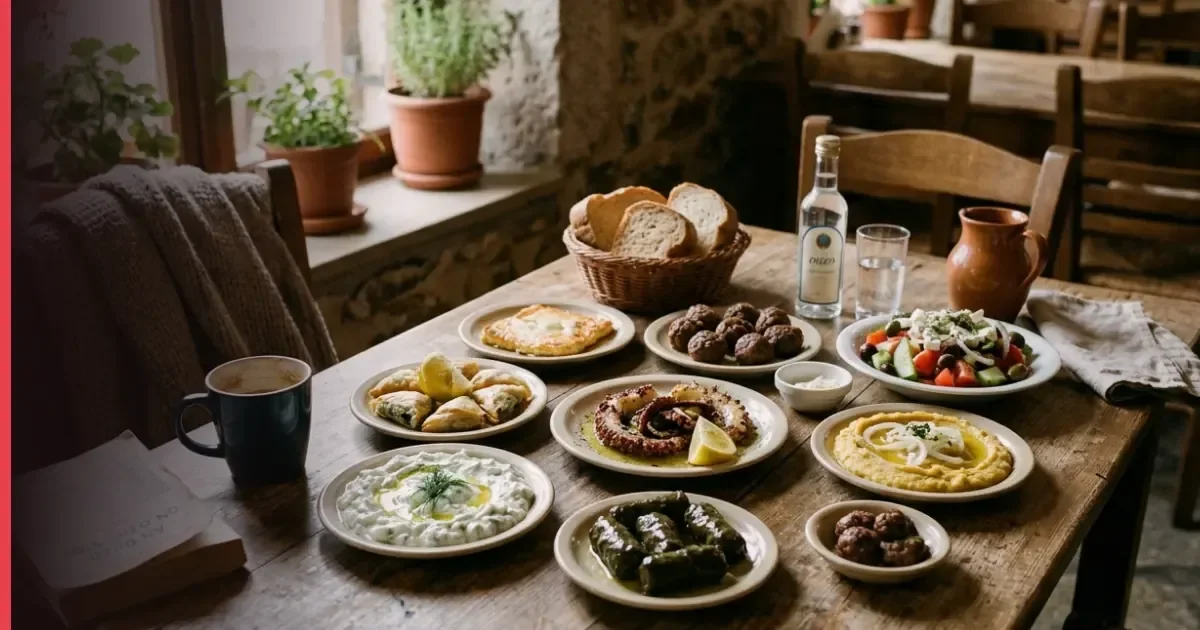
The range is wide, but certain dishes appear on most meze menus. Tzatziki, a yoghurt dip with cucumber and garlic, sits alongside taramasalata, made from cured fish roe. Feta appears in slabs or crumbled over salad, and olives come in varieties that differ by region.
Hot dishes include spanakopita, a filo pastry filled with spinach and cheese, and dolmades, vine leaves stuffed with rice and herbs. Saganaki is fried cheese, served sizzling in a small pan. Grilled octopus, seasoned with olive oil and lemon, is a staple on coastal menus, as are sardines and anchovies.
Meat options range from lamb keftedes, small meatballs flavoured with mint, to loukaniko, a coarse sausage scented with orange peel. Vegetables might include roasted peppers, aubergine slices or fried courgette. Each dish is small enough to try without committing to a full portion.
How to order meze at a Greek restaurant
Most restaurants let you build a meze selection by choosing individual dishes from a list. A group of three or four people might order six to eight plates, balancing cold and hot items, and adding more if the first round disappears.
- Start with two or three cold dishes, such as tzatziki, olives and a salad, to arrive quickly while you decide on the rest.
- Add three or four hot dishes, mixing vegetables, seafood and meat so everyone at the table finds something they want.
- Order pita bread or fresh bread to scoop up dips and mop up olive oil.
- Pace the meal by asking for dishes to arrive in stages, rather than all at once, so nothing cools before you reach it.
- Finish with a single sweet if you have room, though meze meals often end without dessert.
Staff expect you to share everything. If you want a dish for yourself alone, say so when you order, though it goes against the spirit of the meal.
Sharing etiquette and table manners
Meze is communal by design. Plates sit in the centre of the table, and each person takes a little at a time, using their own fork or a serving spoon if one is provided. You do not fill your plate in one go; the idea is to return to each dish several times as the conversation flows.
Taking the last piece from a shared plate without offering it around first is considered poor form. If someone else reaches for it at the same moment, defer or split it. The rhythm matters more than the food itself.
Pita bread is torn by hand and used to scoop dips or wrap small pieces of meat and vegetables. Cutlery is provided, but many dishes are easier to manage with bread as the tool. Licking your fingers is acceptable in informal settings; using a napkin marks you as cautious.
Pairing drinks with meze
Ouzo, the anise-flavoured spirit, is the traditional partner. It is served in a tall glass with water added to turn it cloudy, and the meze slows the drinking. Greek wine, both white and red, works equally well, with lighter whites suiting seafood and richer reds matching lamb and grilled meats.
Retsina, a white wine flavoured with pine resin, divides opinion but pairs well with oily fish and sharp cheeses. Beer is common in tourist areas but less so in traditional tavernas. The drink you choose shapes the dishes that arrive; staff will suggest pairings if you ask.
Vegetarian and seafood-focused meze options
| Type | Examples | Preparation |
|---|---|---|
| Vegetarian | Spanakopita, dolmades, gigantes (giant beans), melitzanosalata (aubergine dip) | Baked, stuffed, stewed or blended |
| Seafood | Grilled octopus, fried calamari, marinated anchovies, prawns saganaki | Grilled, fried, marinated or baked with cheese |
Vegetarian options are plentiful, though some dishes contain cheese or yoghurt. Seafood dominates coastal menus, where the catch changes daily and the kitchen grills or fries it simply. Inland restaurants lean more heavily on meat and vegetables, with seafood appearing as tinned anchovies or salted fish.
Meze at home: assembling your own selection
Replicating a meze spread at home requires little cooking if you start with prepared dips and tinned goods. Tzatziki takes minutes to mix, and taramasalata is sold ready-made in most supermarkets. Add olives, feta, cherry tomatoes and cucumber, and you have the cold base.
For hot dishes, spanakopita and dolmades freeze well and reheat quickly. Grilled halloumi or saganaki needs only a hot pan and a few minutes. If you have access to fresh octopus or squid, boil it first, then char it on a griddle with lemon and olive oil.
Set everything on the table at once, or bring dishes out in waves if you are cooking as you go. The key is variety and the willingness to let people pick at their own pace. Pita bread, warmed in the oven, ties the meal together.
#Meze #Tzatziki #Greek wine #Taverna
Download PDF: Your meze ordering checklist PDF, 28 KB
Further reading
Frequently asked questions
What is the difference between meze and tapas?
Meze originates from Greece and the eastern Mediterranean, while tapas comes from Spain. Both involve small shared plates, but meze traditionally accompanies ouzo or wine and emphasises dips, grilled seafood and vegetables, whereas tapas includes cured meats, fried items and dishes with stronger seasoning.
Can you make a full meal out of meze?
Yes, ordering enough meze dishes to cover vegetables, protein and bread provides a complete meal. Most people order six to eight plates for a group of three or four, which is more than sufficient when combined with pita or fresh bread.
Is meze always vegetarian?
No, meze includes meat and seafood dishes such as grilled octopus, lamb keftedes and loukaniko sausage. However, many options are vegetarian, including tzatziki, spanakopita, dolmades and various dips, so it suits vegetarians well.