Drinks at a Greek restaurant
 Save
The right drink turns a Greek meal into something closer to the experience you would have in Greece itself. Delphi Restaurant explores what sits on the table alongside the food, from the wines that carry pine resin to the anise spirits served with cold water, and the teas and coffees that follow.
Wine and retsina
Greek wine divides into two worlds. Most bottles now follow the patterns you will recognise from other countries: reds from Agiorgitiko or Xinomavro grapes, whites from Assyrtiko or Moschofilero, labelled by region and variety. The other tradition is retsina, white wine sealed historically with pine resin, which leaves a sharp, herbal edge. Some people find it medicinal at first; others take to it immediately because it cuts through oily dishes in a way that softer whites do not.
Order a carafe if the restaurant offers one. It arrives cool, often in a small metal jug, and you pour as you eat rather than committing to a full bottle. Retsina works particularly well with fried cheese, grilled fish and anything involving lemon.
Ouzo, tsipouro and serving rituals
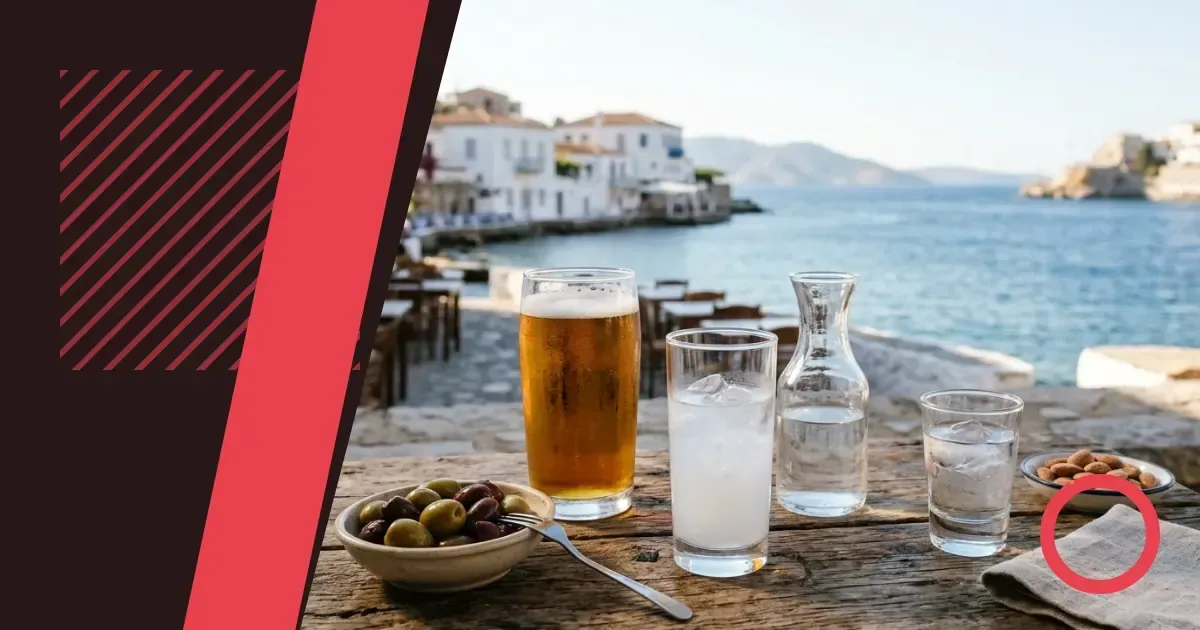
Both spirits are clear, high-proof and flavoured with anise. Ouzo is the sweeter and more approachable of the two; tsipouro (called raki in Crete) is drier and often stronger. Neither is drunk neat in the way you might treat whisky. Instead, a small glass arrives with a separate jug of cold water and sometimes ice.
Pour water into the ouzo and it turns cloudy white, a reaction caused by the anise oils. The dilution brings the alcohol down and opens up the flavour. Sip it slowly alongside meze rather than as a quick shot, and the anise begins to make sense against salty olives, cured fish and sharp cheeses.
Tsipouro often comes with no added flavouring, though some bottlings include anise. It has a rougher, more rustic feel, and pairs well with grilled meat or anything cooked over charcoal.
Greek coffee and mountain tea
Greek coffee is made by boiling finely ground beans with sugar in a small pot called a briki. The result is thick, sweet and served in a tiny cup with the grounds still in it. You drink the liquid from the top and leave the sludge at the bottom. Asking for it metrios gets you medium sweetness; sketos means no sugar, glykos means very sweet.
After a heavy meal, some restaurants offer mountain tea – dried herbs from high-altitude plants, usually sideritis, steeped in hot water. It tastes earthy and faintly floral, with none of the bitterness of black tea, and is often served with a spoonful of honey on the side.
What to drink with different dishes
| Dish type | Recommended drink | Why it works |
|---|---|---|
| Fried or oily meze | Retsina or ouzo with water | The resin or anise cuts through richness |
| Grilled meat | Red wine or tsipouro | Tannins or alcohol balance charred flavours |
| Fish and seafood | White wine or retsina | Crisp acidity lifts delicate flesh |
| Cheese and olives | Ouzo or dry white | Salt and anise complement each other |
| Rich stews | Full-bodied red wine | Weight matches weight |
Soft options and aperitifs
Not every meal calls for alcohol. Greek restaurants often stock sour cherry juice (vissinada) and bitter orange cordial (portokalada), both served diluted with cold water or soda. They are intensely fruity and work well as an aperitif or alongside fried snacks.
Lemonade made from fresh lemons, sugar and cold water is another common choice, particularly in summer. It arrives cloudy, unstrained, with visible pulp and a tartness that wakes up your palate before the food comes.
Beer and its place at the table
Greek lagers – Mythos, Alfa, Fix – are light, cold and unremarkable in the way that suits hot weather and salty food. They do not add much to the meal, but they do not interfere either, and a small bottle often costs less than a glass of wine.
Beer works when you want something simple that will not distract from strong flavours, or when you are eating casually – souvlaki at a counter, a quick gyros, anything ordered standing up.
Digestifs and closing the meal
A shot of something strong often appears at the end without being asked for, brought by the server as the bill arrives. It might be Metaxa, a sweetened brandy with vanilla and spice notes, or a small glass of homemade liqueur – cherry, walnut, mastic. These are offered as a gesture of hospitality rather than an upsell, and refusing them is not rude, though accepting signals that you appreciate the ritual.
If you prefer something gentler, ask for mountain tea or Greek coffee. Either will do the job of marking the transition from eating to talking.
Frequently asked questions
How do you drink ouzo without it tasting too strong?
Pour cold water into the glass until the ouzo turns cloudy, which dilutes the alcohol and opens up the anise flavour. Add ice if you prefer it colder. Sip it slowly alongside food rather than drinking it quickly on its own.
What makes retsina taste the way it does?
Retsina is white wine that has been sealed with pine resin, a method dating back to ancient Greece. The resin leaves a sharp, herbal edge that some people find medicinal at first but which cuts through oily or rich dishes effectively.
Can you order Greek coffee without sugar?
Yes. Ask for it sketos, which means no sugar. The coffee is made in a small pot with the grounds still in it, so the level of sweetness is set during preparation rather than added afterward.