Ordering Greek Food for a Group: Six Steps to Get It Right
 Save
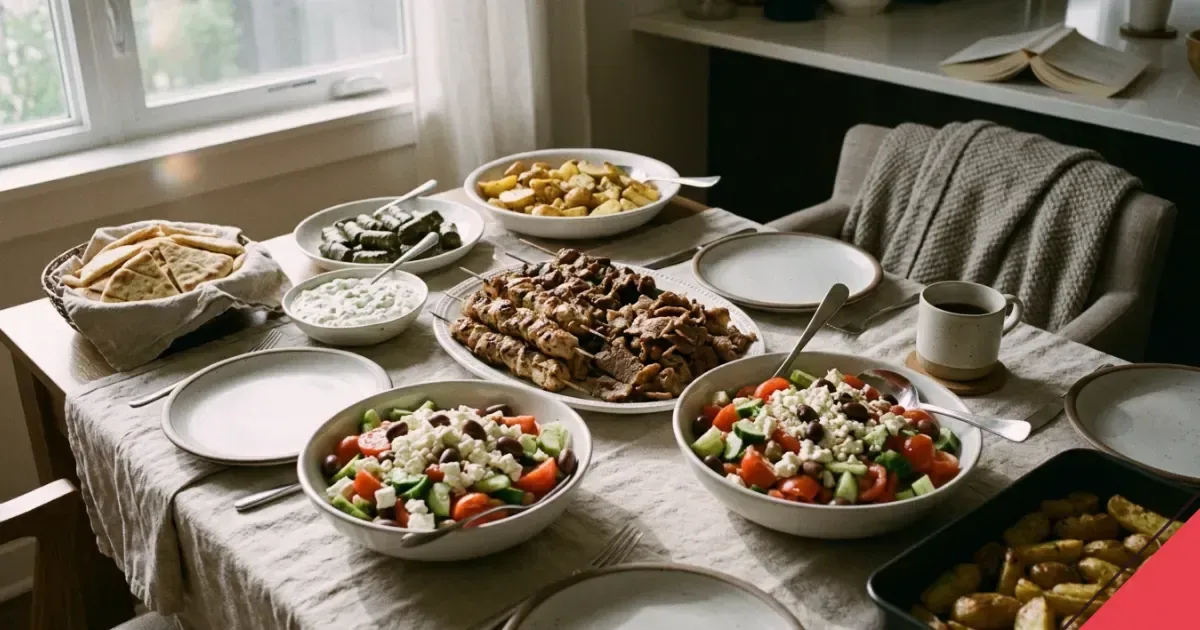
Ordering Greek food for a group comes down to one idea: order to share, not to divide. Instead of each person choosing a single main, a group does better picking a spread of smaller dishes that land in the middle of the table and get passed around. Delphi Restaurant puts together this guide to help you build that spread with confidence, from the first round of dips to the last plate of something grilled.
Why sharing works better than individual mains
A Greek meal is built around variety, not a single plate in front of each guest. Ordering a wide mix of smaller dishes means everyone gets to taste more of the menu, and the table naturally fills with colour and different textures. It also suits groups with mixed appetites, since nobody is stuck with one dish they might not fully enjoy.
This style of eating has a name worth knowing: meze, a selection of small plates meant for sharing rather than a starter-and-main structure. Thinking in meze terms from the start makes the rest of the ordering process much easier.
Working out how many dishes to order
A reliable starting point is to order slightly more dishes than there are diners, so the table has enough variety without becoming overwhelming. A group of four or five people does well with a run of dips, a couple of vegetable dishes, something fried, and two or three larger plates to finish on. Larger groups simply repeat the pattern rather than ordering one of everything.
- Start with two or three cold dishes to open the table
- Add one or two hot small plates before the mains arrive
- Order fewer large mains than diners, since sides will fill gaps
- Leave room to add a dish later if the table is still hungry
Building a balanced spread
A good spread moves through textures and temperatures rather than repeating the same idea twice. Start cold and light, move into something warm and savoury, then bring in the grilled or baked dishes that anchor the meal. If you want a clearer sense of what belongs on the menu before you sit down, it helps to read a plain-English guide to common Greek menu items.
Dips and cold plates
Dips are the natural opening move for any group table. A creamy cucumber and yoghurt dip sits well alongside a smoky aubergine one, and both pair naturally with warm bread for scooping. Rotating two or three different dips gives the table something to pick at while the rest of the order is still arriving.
Hot small plates
Fried cheese, stuffed vine leaves and warm vegetable dishes all work as a middle course. These dishes tend to disappear quickly, so ordering slightly more than one per two guests keeps the table happy. If fish is on the menu, it's worth knowing what to check before ordering seafood at a Greek restaurant, since quality varies more here than with other dishes.
Mains to anchor the table
Once the smaller plates are underway, bring in a couple of larger dishes such as grilled meat or a baked casserole dish to anchor the meal. These are usually ordered to be cut and shared rather than served to one person, so check with the table before assuming otherwise.
Reading the table for dietary needs
Greek menus are generally forgiving for mixed groups, since so many dishes are vegetable-based or naturally meat-free. Flagging any dietary needs early, before the first round of dishes is ordered, means the kitchen can plan the spread properly instead of scrambling to adjust later. For groups with vegetarians, it's worth looking at which vegetarian dishes to order with confidence at a Greek restaurant so nobody feels like an afterthought.
Pacing the order through the meal
Ordering everything at once can overwhelm both the kitchen and the table. A better approach is to order the first wave of dishes, let the table start eating, and bring in mains and anything heavier once the pace settles. This also leaves room to order one or two extra dishes if the group is still hungry after the first round.
| Approach | Best for | What to watch |
|---|---|---|
| Order everything at once | Groups in a hurry | Table gets crowded fast |
| Order in two waves | Most group dinners | Needs a pause between rounds |
| Order little and often | Long, relaxed evenings | Service may slow down |
Steps for ordering as a group
- Agree on any dietary needs before looking at the menu properly
- Pick two or three cold dishes to start
- Add one or two hot small plates to follow
- Choose fewer mains than diners, since sides fill the gaps
- Hold back one choice in case the table wants more
- Order that extra dish only once the first wave has landed
Speaking up without feeling awkward
Ordering a large shared spread can feel unfamiliar if you're used to one plate per person, but staff are generally used to guiding groups through it. Asking what suits sharing well is a perfectly normal question to ask, not an admission of not knowing the menu. If pronunciation is holding you back from asking confidently, a short guide to pronouncing Greek dishes can smooth that over before you sit down.
Common mistakes groups make
The most frequent misstep is ordering too many large mains and not enough variety, which leaves the table full but short on the sharing experience that makes this style of eating enjoyable. The second is ordering everything in one go, which crowds the table and rushes the meal. A no-nonsense fix for both is simply to order in waves and lean toward smaller plates over big individual ones.
Download PDF: Group ordering checklist for a Greek meal PDF, 28 KB
Further reading
Frequently asked questions
Can you order Greek food for a group without everyone agreeing on the same dishes?
Yes. Because the food is shared rather than served as individual mains, nobody needs to agree on one dish. Ordering a wide spread means everyone finds something they like somewhere on the table.
What is the best way to order Greek food for sharing?
Build the order around a mix of cold dips, hot small plates and a couple of larger mains, ordering slightly more dishes than there are diners. Spacing the order into two waves rather than one keeps the table from feeling crowded.
How do you order family style at a Greek restaurant if the group has different appetites?
Lean on variety rather than portion size, since a wider spread naturally suits mixed appetites better than individual mains. Lighter eaters can pick at dips and vegetable dishes while bigger appetites fill up on the grilled or baked plates.