6 dishes to order at a Greek restaurant for the first time
 Save
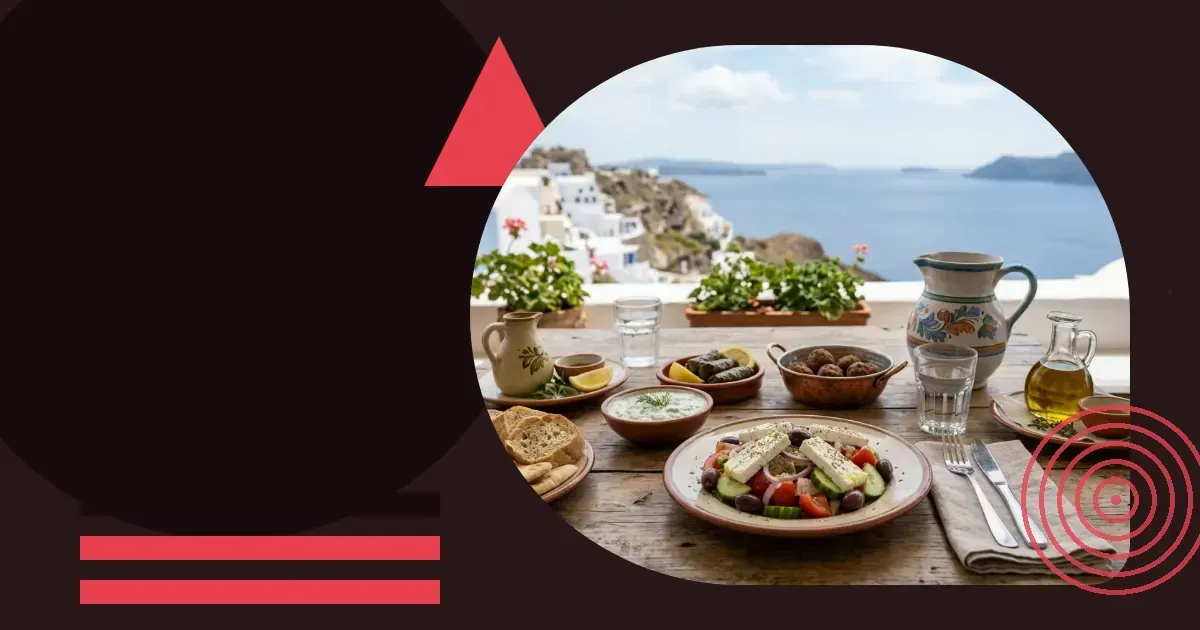
Order tzatziki, Greek salad and grilled meat or fish on your first visit to a Greek restaurant. These three cover the foundations — yoghurt-based dips, fresh vegetables with feta and olive oil, and straightforward protein cooked over charcoal — without unfamiliar textures or complex spicing. Delphi Restaurant exists to make Greek dining clearer, whether you are walking into a taverna for the first time or building confidence with the menu.
What the menu structure tells you
Greek restaurant menus split into small plates, large plates and sides. Small plates are called meze — dips, grilled vegetables, cheese dishes and pastries meant for sharing. Large plates hold grilled fish, meat dishes and baked layered meals such as moussaka. Bread arrives without asking; olives and a small salad sometimes come before you order.
The sequence matters less than in formal dining. Order a few small plates to taste first, then add a main dish if you are still hungry. Nothing on the menu demands a specific order, and asking for everything at once or in stages works equally well.
Small plates that introduce the flavours
Tzatziki is strained yoghurt blended with grated cucumber, garlic, olive oil and a little vinegar or lemon. It arrives cold, thick enough to hold a spoon upright, and tastes clean and sharp. Pronounce it tsa-TZEE-kee. Scoop it with warm pita bread; the contrast between cold dip and soft bread shows why the pairing is standard.
Dolmades (dol-MAH-thes) are vine leaves rolled around rice, sometimes with minced meat, sometimes without. The vegetarian version with rice, herbs and lemon is lighter and suits a first visit. They arrive at room temperature, glistening with olive oil, and taste faintly of the brine the leaves were stored in.
Spanakopita (spa-na-KO-pee-ta) is spinach and feta wrapped in phyllo pastry, baked until the layers shatter when you press a fork through them. It comes as a triangle or a square, warm or at room temperature, and the filling is salty from the cheese and slightly sweet from the cooked spinach.
How much to order from the small plates
Two or three meze between two people gives you enough to share without filling up before the main dish. One dip, one vegetable-based plate and one pastry or cheese dish cover the range. If the group is larger, add one meze per extra person and expect some to be left over — Greek portions assume sharing and return visits.
Main dishes with the fewest surprises
Souvlaki (soov-LA-kee) is skewered meat — usually pork, chicken or lamb — grilled over charcoal and served with lemon wedges, pita and sometimes chips. The meat is marinated in olive oil, lemon and oregano, so it tastes bright rather than heavy. Chicken souvlaki is the safest choice if you are unsure; pork has more flavour but can be fatty.
Grilled fish arrives whole, head and tail intact, often with just olive oil, lemon and oregano. Sea bream and sea bass are the most common. The fish is cooked simply, and the waiter may fillet it at the table or leave you to navigate the bones yourself. If bones worry you, ask whether the kitchen can fillet it before it leaves the pass.
Both dishes come with a side of chips, rice or boiled greens. The greens — called horta (HOR-ta) — are wild or cultivated leaves boiled until soft, then dressed with lemon and olive oil. They taste bitter and earthy, and they are an acquired preference rather than a safe first choice.
Salads and sides that anchor the meal
Greek salad — sometimes listed as horiatiki (ho-ree-A-tee-kee) — is tomatoes, cucumber, red onion, green pepper, olives and a slab of feta, dressed with olive oil and oregano. No lettuce. The vegetables are cut large, and the feta sits on top rather than crumbled through. It tastes sharper and saltier than most salads served in the UK, and the olive oil is generous.
Order one between two people as a side, or as a main dish if you want something light. It pairs well with bread and any of the small plates, and it balances richer dishes such as moussaka.
Bread and olive oil
Bread comes to the table without a separate charge in most Greek restaurants. It is usually white, soft inside with a thin crust, and still warm. Use it to scoop dips, mop up olive oil from the salad plate, or eat alongside grilled meat. If it does not arrive within a few minutes of sitting down, ask for it — it is assumed rather than offered.
What to skip on a first visit
Octopus, liver, tripe and brain dishes are common on Greek menus but need familiarity with stronger flavours and chewier textures. Moussaka is layered aubergine, minced meat and béchamel sauce, baked until soft — rich, filling and divisive. Some find it comforting; others find the aubergine too soft or the béchamel too heavy. Leave it for a second visit when you know whether you prefer lighter or heavier dishes.
Retsina — white wine flavoured with pine resin — splits opinion sharply. It tastes medicinal to some, refreshing to others. Ask for a small glass before committing to a bottle, or choose a dry white wine from a Greek island instead.
How to navigate pronunciation without hesitating
- Read the menu before the waiter arrives, and pick two or three dishes you want to try.
- When ordering, point to the dish on the menu and say the name as closely as you can manage — staff expect mispronunciation and will not correct you unless you ask.
- If a name looks unmanageable, describe the dish instead: "the spinach pastry" or "the yoghurt dip with cucumber" works perfectly well.
- Ask the waiter how to pronounce one dish you are curious about — most are happy to say it slowly and let you repeat it.
- Write down names you want to remember for next time, or take a photo of the menu before you leave.
Timing and portions
Greek restaurant portions are larger than equivalent dishes in other European cuisines, and sharing is built into the structure. A meze serves two to three people comfortably; a main dish often serves one and a half. If you are dining alone, one small plate and a half portion of a main dish — where the kitchen offers it — will usually be enough.
Food may arrive in an order you did not expect. Small plates sometimes come out together, or after the main dish, depending on what is ready first. Mention if you want a particular sequence, but expect flexibility rather than precision.
Drinks that suit the food
Still or sparkling water comes in bottles, usually chilled, and is ordered by the bottle rather than the glass. Greek wines are improving rapidly, and a white wine from Santorini or Crete suits most of the menu. Assyrtiko is the grape to ask for if you want something crisp and dry that cuts through olive oil and feta.
Ouzo is an anise-flavoured spirit served as an aperitif or alongside meze, usually diluted with water or ice. It turns cloudy when water is added and tastes strongly of liquorice. A small glass is enough to decide whether you want more; it is not meant to be drunk quickly or in large quantities.
What a typical order looks like
| Course | Dish | Why it works |
|---|---|---|
| Small plate | Tzatziki with pita | Mild, cooling, easy to share |
| Small plate | Spanakopita | Introduces phyllo and feta without strong flavours |
| Side | Greek salad | Balances richer dishes, adds freshness |
| Main | Chicken souvlaki | Straightforward grilled meat, familiar texture |
This combination shows the range of Greek cooking — yoghurt, vegetables, cheese, pastry, charcoal-grilled meat — without anything that needs acquired taste. Add or remove dishes depending on appetite and curiosity, but these four cover the foundations reliably.
How paying works
The bill comes when you ask for it, not before. Service is usually included, but rounding up or leaving small change is common. Splitting the bill is straightforward; mention it when asking for the total. Some smaller tavernas take cash only, so check before sitting down or ask when you order drinks.
Greek restaurants expect leisurely meals. No one will hurry you to leave once you have finished eating, and lingering over coffee or a small dessert is normal. If you are in a rush, mention it when ordering so the kitchen knows to send everything out promptly.
For more guidance after your first visit, read about what meze is and how to order it, or explore vegetarian options at Greek restaurants if you want to move beyond meat-based mains. Once you are comfortable with the basics, Greek restaurant etiquette explains the unwritten customs that shape the experience.
Download PDF: First visit to a Greek restaurant: ordering checklist PDF, 30 KB
Further reading
Frequently asked questions
What should I order at a Greek restaurant if I have never been before?
Start with tzatziki, Greek salad and chicken souvlaki. These three dishes are approachable, widely available and show the core flavours of Greek cooking without strong or unfamiliar elements.
How do I pronounce Greek dishes without getting them wrong at the table?
Point to the dish on the menu and say the name as best you can, or describe it in English. Staff expect mispronunciation and will understand what you mean without correcting you.
Is it normal to share dishes at a Greek restaurant or should I order my own meal?
Sharing is built into Greek dining. Small plates are designed for two or three people, and ordering several meze between the group is standard. Mains are often large enough to share as well.
What is the difference between meze and a main course on a Greek menu?
Meze are small plates meant for sharing — dips, pastries, grilled vegetables and cheese dishes. Mains are larger individual portions of grilled meat, fish or baked dishes such as moussaka.
Can I ask for dishes to come in a particular order at a Greek restaurant?
Yes, but expect flexibility. Greek kitchens often send dishes out as they are ready rather than in strict courses. Mention your preferred sequence when ordering if it matters to you.
How much should I order for one person at a Greek restaurant without overfilling myself?
One or two small plates and a main dish is usually enough for one person. Portions are generous, and you can always add more if you are still hungry after the first round.