Greek starters and meze
 Save
Greek starters set the stage for the meal ahead, built around fresh ingredients, simple preparation and flavours that sharpen rather than overwhelm. Delphi Restaurant guides you through the meze tradition, the dips worth knowing by name, and how to approach a starter menu with confidence.
The meze tradition
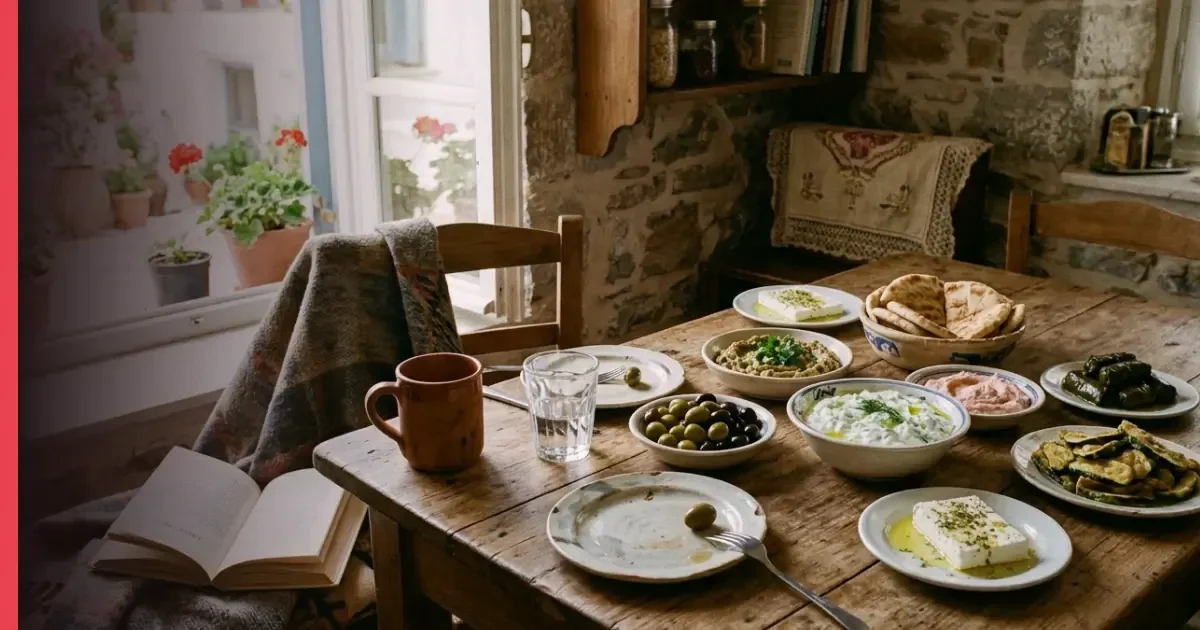
Meze refers to small plates served before or alongside the main course, often shared across the table. In Greece the practice turns eating into a slower, more social occasion. A taverna may bring three or four dishes at once, each one offering a different texture or temperature.
Ordering meze allows you to taste more without committing to a single large dish. It also lets you adjust the meal as you go—adding another plate if the table is still hungry, or moving straight to the main course if the starters have done their job.
Cold starters and dips
Most Greek starter menus lead with a selection of cold dips, served with warm bread or pita. Tzatziki combines strained yoghurt, cucumber, garlic and olive oil into a cooling, slightly sharp accompaniment. Melaki, often listed as melitzanosalata, is a smoked aubergine purée with lemon and parsley. Taramasalata brings a pale-pink fish-roe spread, rich and salty, balanced by bread or potato in the base.
These dips arrive at room temperature or lightly chilled. They're designed to be scooped rather than spread thinly, so the bread plays a supporting role rather than the main one.
Warm plates
Warm starters tend to be more substantial. Saganaki is fried cheese—usually graviera or kefalotyri—served hot in a small pan, often with a squeeze of lemon over the top. Dolmades are vine leaves wrapped around rice, herbs and sometimes minced meat, served warm or at room temperature depending on the filling.
Fried courgette slices, known as kolokythakia tiganita, appear on many menus, lightly battered and salted. They're simple but effective, particularly when paired with tzatziki on the side.
Grilled vegetables
Grilled peppers, aubergine and courgette often feature as part of a mixed starter plate. The vegetables are charred over an open flame, then dressed with olive oil and a little vinegar or lemon. The smokiness from the grill does most of the work.
Ordering and sharing
Greek starter portions are designed for sharing, so two or three dishes between two people works well. If you're ordering for a larger group, aim for one dish per person, mixing cold and warm options to cover different textures.
Restaurants typically bring starters as they're ready rather than plating them all at once. This staggers the meal and keeps the warm dishes from cooling while you wait. If you prefer everything together, mention it when you order.
Pairing starters
Pairing a creamy dip like tzatziki with something sharper—taramasalata or melaki—gives the table contrast. Adding a warm dish such as saganaki or fried courgette introduces a different temperature and keeps the meal from feeling one-note.
What to expect on arrival
| Starter | Temperature | Main ingredient | Texture |
|---|---|---|---|
| Tzatziki | Cold | Yoghurt, cucumber | Smooth, thick |
| Melaki | Cold | Smoked aubergine | Coarse purée |
| Saganaki | Hot | Fried cheese | Crisp outside, soft centre |
| Dolmades | Warm or room | Vine leaves, rice | Soft, slightly oily |
| Grilled peppers | Warm | Red or green peppers | Charred, tender |
Bread and olive oil
Bread arrives early and often without asking. It's there to scoop dips, mop up olive oil, and fill the gaps between dishes. Greek bread tends to be denser than French or Italian styles, with a tighter crumb that holds up under weight.
Olive oil may come separately in a small dish, sometimes with a grind of black pepper or a pinch of oregano. Dipping plain bread into good oil is a legitimate starter in itself, particularly if the oil is from a single estate or a recent harvest.
Common questions answered
First-time diners sometimes hesitate over portion sizes or the order in which dishes should arrive. Greek menus rarely specify serving sizes in numbers, so asking the server for guidance—especially when ordering meze—helps avoid over- or under-ordering.
If a dish arrives that you didn't expect, it may be a compliment from the kitchen or a small offering from the house. Accepting it graciously is standard practice, even if your table is already full.
Frequently asked questions
How many Greek starters should two people order when sharing?
Two or three dishes work well for two people, mixing cold dips with one warm plate to cover different textures and temperatures without over-ordering.
What is the difference between tzatziki and melaki as Greek dips?
Tzatziki is a yoghurt-based dip with cucumber and garlic, smooth and cooling. Melaki is a smoked aubergine purée with lemon, coarser in texture and slightly smokier in flavour.
Do Greek starters arrive all at once or one at a time during the meal?
Greek restaurants typically bring starters as they're ready, which staggers the meal and keeps warm dishes from cooling. You can ask for everything together if you prefer.
Is saganaki always made with the same type of cheese in Greek restaurants?
What should first-time diners ask the server when ordering Greek meze for a group?
Ask about portion sizes and which dishes are designed for sharing. Servers can also suggest how many plates suit the size of your group and which combinations offer the best variety.
Are dolmades always served warm or do some restaurants serve them cold?
Dolmades with a rice and herb filling are often served at room temperature or lightly chilled, while those with meat are typically served warm. The menu or server will usually clarify.