Skordalia: the bold garlic dip and 5 dishes it belongs with
 Save
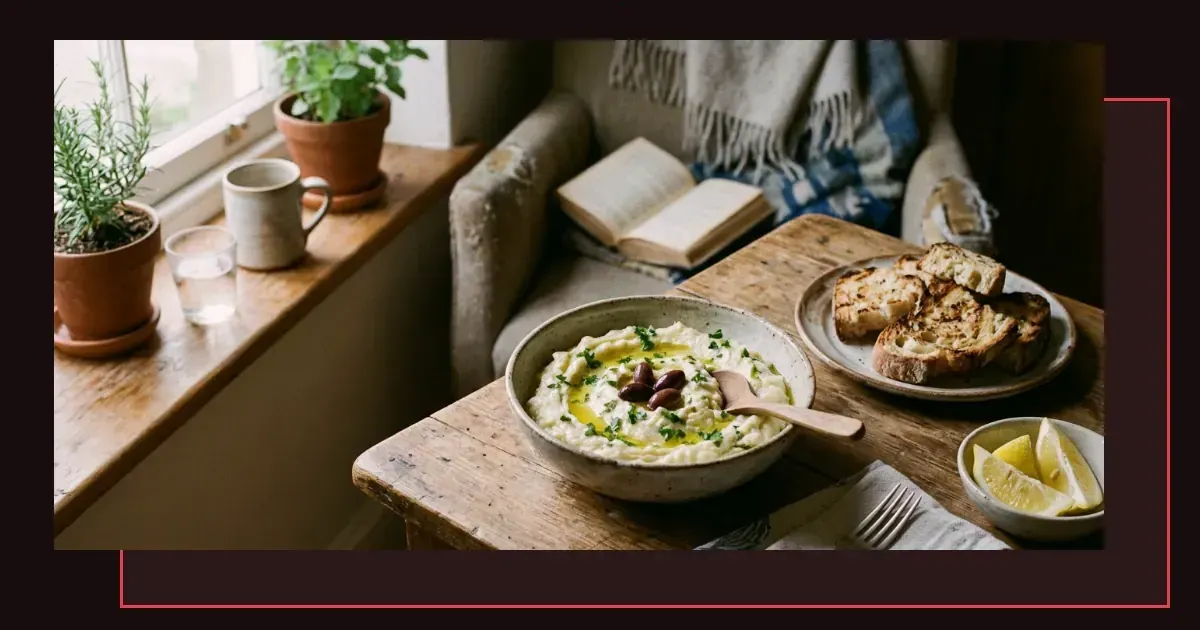
Skordalia is a thick, intensely garlicky dip made from either mashed potatoes or soaked bread, blended with olive oil, vinegar and raw garlic. It appears on Greek restaurant tables as a side dish or meze, and its flavour is direct: sharp, creamy and unapologetically strong. Delphi Restaurant explores what skordalia is, how it differs from other dips, and which foods it traditionally accompanies.
The base and texture
Skordalia uses one of two foundations. The potato version yields a smooth, dense dip with body; the bread version is lighter and slightly coarser. Both are emulsified with olive oil in the same way you would build mayonnaise, which gives the dip its creamy consistency without any dairy.
Raw garlic is the defining ingredient. The amount varies by household and region, but the flavour is never subtle. Lemon juice or vinegar adds acidity, and a pinch of salt balances the oil. Some recipes include a handful of blanched almonds or walnuts for richness, though the simpler versions rely on the interplay of starch, oil and garlic alone.
Potato or bread
The potato base is more common in modern Greek restaurants. Floury varieties work best because they break down easily and absorb oil without turning gluey. The bread version is older and more traditional in island cooking, where stale bread was soaked in water, squeezed dry and pounded with garlic in a mortar.
Flavour profile
Skordalia tastes sharp and clean. The garlic hits first, followed by the richness of olive oil and a bright note from the acid. It is not mild, and it does not fade into the background. The texture cushions the intensity slightly, but this is a condiment for people who want garlic to be the main event.
Compared to tzatziki, skordalia is bolder and heavier. Tzatziki uses yogurt and cucumber, which soften the garlic and add coolness. Skordalia has no dairy and no vegetables to temper it. The two dips serve different purposes: tzatziki complements grilled meat and can be eaten in quantity, while skordalia is a sharper accent used more sparingly.
What skordalia traditionally accompanies
Skordalia is rarely eaten on its own. It is paired with foods that can stand up to its strength, usually fried or boiled dishes with mild flavours that benefit from the punch of raw garlic and olive oil. The pairings follow a logic: something crisp or soft, something plain, something that needs contrast.
Fried salt cod
Bakaliaros skordalia – fried salt cod with skordalia – is the best-known pairing and a fixture on Greek tables, especially during religious fasting periods. The fish is soaked to remove excess salt, coated in batter and fried until crisp. The skordalia cuts through the richness of the fried coating and complements the flaky, savoury fish inside.
Fried courgette and aubergine
Thin slices of courgette or rounds of aubergine, battered and fried, are served with skordalia as a meze or side dish. The vegetables are mild and slightly sweet, and the dip adds depth without overwhelming them. The contrast between the crisp exterior and the creamy, punchy sauce is deliberate.
Beetroot
Boiled beetroot, served warm or at room temperature, is often accompanied by skordalia. The earthy sweetness of the beetroot balances the sharpness of the garlic, and the dip clings to the slices without sliding off. This combination appears more often in tavernas than in formal restaurants, and it is particularly common in the Peloponnese.
Grilled or boiled vegetables
Boiled greens – horta – are sometimes dressed with skordalia instead of lemon and oil. Grilled peppers and boiled potatoes also work, especially when the vegetables are served simply and need a strong condiment to lift them. The dip does not suit delicate flavours, so the vegetables paired with it tend to be robust or earthy.
Bread
A small bowl of skordalia with warm pita or crusty bread is a common starter. The bread acts as a vehicle rather than a pairing, and the dip is spread thickly. This is more about texture than flavour balance: the bread soaks up the oil and carries the garlic.
How to approach skordalia on a menu
Order skordalia when you want a bold, savoury element on the table. It is not a dip for everything, and it will dominate milder dishes if you are not careful. A small portion goes a long way, and sharing it is common.
- Check what it is served with – the dish it accompanies will tell you whether the restaurant treats it as a side or a meze in its own right.
- Ask whether the base is potato or bread if the menu does not specify, especially if you have a preference for texture.
- Expect it to be strong – if you find raw garlic overwhelming, skordalia is not the place to ease into it.
- Use it sparingly at first – a small amount on each bite is enough, and you can always add more.
- Pair it with fried or plain foods on your table rather than dishes that already carry strong sauces or seasonings.
Regional variations
The Ionian islands favour a bread-based skordalia, often with walnuts. The mainland and the Aegean islands lean towards potato. Some versions include vinegar, others use only lemon juice, and a few add a spoonful of mustard for extra bite. The garlic quantity varies widely: some recipes call for restraint, others treat it as the main ingredient by volume.
In northern Greece, you may encounter skordalia made with a mix of potato and stale breadcrumbs, which gives a slightly grainy texture. Cretan versions sometimes include a handful of soaked rusks instead of bread, and Cypriot skordalia occasionally uses cooked beetroot blended into the base, which turns the dip pink and adds a faint sweetness.
Ordering and storing
Skordalia is usually brought to the table in a small bowl alongside the dish it is meant for. Some restaurants include it automatically with fried cod or vegetables, while others list it separately as a side. If you are unsure whether a dish comes with skordalia, the menu description or your server will clarify.
| Pairing | Why it works | Texture contrast |
|---|---|---|
| Fried salt cod | Cuts through fried richness, complements savoury fish | Crisp batter, creamy dip |
| Fried courgette | Adds depth to mild, slightly sweet vegetable | Crisp slices, smooth sauce |
| Boiled beetroot | Earthy sweetness balances sharp garlic | Tender slices, thick dip |
| Boiled greens | Lifts plain vegetables with bold flavour | Soft leaves, dense dip |
If you are ordering skordalia as part of a meze spread, consider its strength when choosing other dishes. It pairs well with taramasalata and olives, which share a similar intensity, but can overpower milder dips like melitzanosalata. Balance the table with something fresh – a Greek salad or a plate of tomatoes – to give your palate a rest between bites.
Making skordalia at home
Skordalia is straightforward to make if you have a food processor or a sturdy arm. Boil floury potatoes until soft, then mash or blend them while still warm. Add peeled garlic cloves, a generous pour of olive oil, lemon juice or vinegar, and salt. Blend until smooth, adding oil gradually to emulsify. The dip should be thick enough to hold its shape on a spoon.
For a bread-based version, soak stale white bread in water, squeeze out the excess, and blend with garlic, oil and vinegar. The bread breaks down completely, leaving a lighter, slightly airier texture than potato. Some cooks add a slice of soaked bread to a potato skordalia to adjust the consistency if it becomes too dense.
Raw garlic mellows slightly if the skordalia sits for an hour before serving, though it will never be mild. Store it covered in the fridge, where it will keep for several days. Bring it to room temperature before serving – cold skordalia loses some of its aroma and the oil can separate.
When skordalia appears on the table
Skordalia is not a year-round dish in the way tzatziki is. It has stronger associations with fasting periods in the Greek Orthodox calendar, when meat and dairy are avoided and fried fish with skordalia becomes a meal in its own right. Outside those times, it appears as a meze or a side dish, particularly in tavernas and family-run restaurants where traditional pairings are still observed.
In more formal settings, skordalia is less common. It is a rustic preparation, rooted in home cooking and the kind of eating that happens at shared tables. If you want to understand how a Greek restaurant approaches its menu, the presence of skordalia – and what it is served with – will tell you something about the kitchen's priorities.
Skordalia is bold, uncompromising and built around a single ingredient. It is not for everyone, but for those who want garlic at the centre of the plate, it delivers exactly what it promises.
Download PDF: Ordering skordalia: a quick guide PDF, 28 KB
Further reading
Frequently asked questions
Can you eat skordalia if you are avoiding dairy?
Yes. Skordalia contains no dairy – it is made from potato or bread, olive oil, garlic and vinegar or lemon juice. It is suitable for anyone avoiding milk, cream or yogurt.
How strong is the garlic flavour in skordalia compared to tzatziki?
Skordalia is much stronger. Tzatziki uses yogurt and cucumber to soften the garlic, while skordalia has no dairy and relies on raw garlic as the main flavour. It is sharp and direct, not mild.
What should you order alongside skordalia to balance a meze spread?
Order something fresh and crisp, such as a Greek salad or sliced tomatoes, to give your palate a rest. Skordalia is intense, and it pairs better with other bold flavours like olives or taramasalata than with milder dips.