Horiatiki: the 6 ingredients that define Greece's village salad
 Save
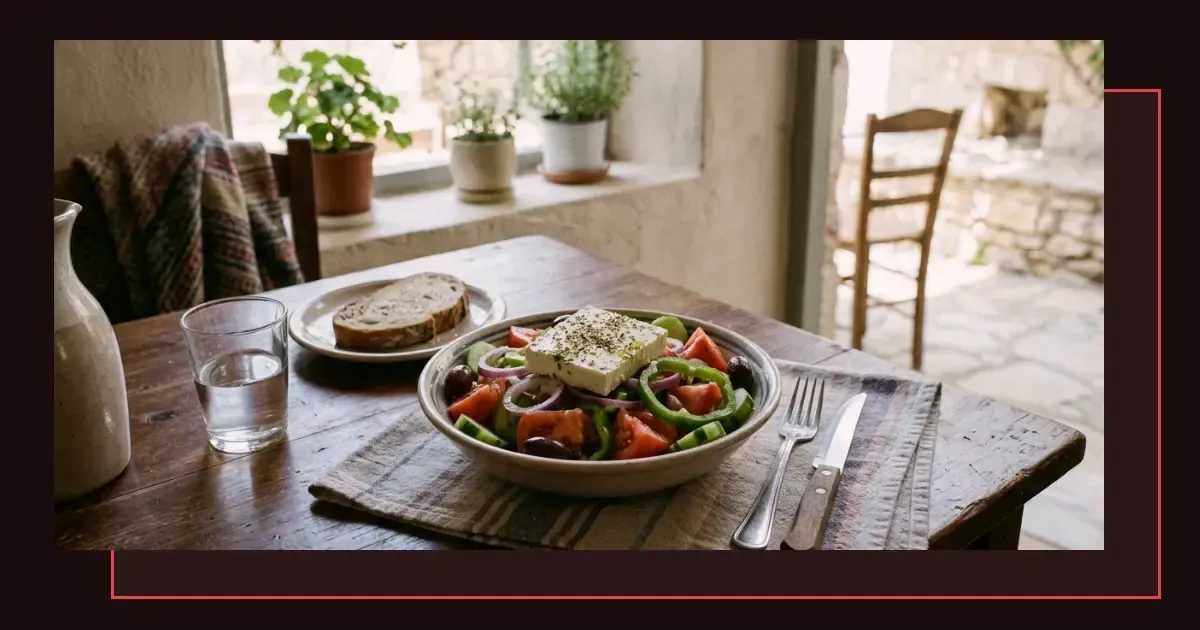
Horiatiki is a Greek village salad built from tomatoes, cucumber, onion, green pepper, olives and feta, dressed with olive oil and oregano. What sets it apart from most versions served outside Greece is the complete absence of lettuce and the way the feta sits unbroken on top. The name comes from horio, meaning village, and the dish reflects a time when these ingredients were what the countryside had in abundance. Delphi Restaurant looks at what makes horiatiki authentic, how it differs from the salads many people know as Greek, and what to expect when you order it.
The six ingredients and why each one matters
Every component brings something the others need. Tomatoes are the foundation, cut into wedges thick enough to hold their shape and release just enough juice to blend with the oil. Cucumber is peeled in stripes or left whole, depending on the kitchen, and sliced into half-moons that add coolness without waterlogging the bowl. Red onion is sliced thin and soaked briefly in cold water to take the edge off its sharpness. Green pepper arrives in rings or strips, contributing a mild bitterness that balances the sweetness of ripe tomatoes.
Kalamata olives are added whole, their brine and flesh enriching the dressing that forms at the bottom of the plate. Finally, feta sits on top as a single slab, never crumbled, so diners break off pieces as they eat. The cheese is often made from sheep's milk or a blend of sheep and goat, firmer and saltier than many supermarket blocks. Olive oil and dried oregano are poured over everything just before serving.
What you will not find in a traditional horiatiki
Lettuce is the most common addition in restaurants outside Greece, turning horiatiki into something closer to a mixed salad. In the villages where the dish originates, lettuce was never part of the formula. Nor were carrots, radishes, capers or vinegar, though some modern interpretations include them. The original version is simpler and relies on the quality of each ingredient rather than the number of them.
How horiatiki differs from a Greek salad
Outside Greece, the term Greek salad often describes a dish with chopped lettuce, diced feta, cherry tomatoes and a vinaigrette. Horiatiki follows a stricter code: no lettuce, no crumbled cheese, no vinegar. The feta remains whole, the vegetables are cut larger, and olive oil does all the work a dressing would do elsewhere. The distinction matters because each approach changes the texture and the balance. A horiatiki is denser, with every forkful carrying the weight of olive, cheese and tomato together. A westernised Greek salad is lighter and mixed more evenly, making it easier to eat quickly but less anchored to the meal.
| Element | Horiatiki | Westernised Greek salad |
|---|---|---|
| Base | Tomato and cucumber | Lettuce with vegetables |
| Feta | Whole slab on top | Crumbled throughout |
| Dressing | Olive oil and oregano | Oil and vinegar blend |
| Serving | Unmixed, assembled | Tossed before plating |
Preparation and how it reaches the table
A horiatiki is assembled rather than mixed. Vegetables are arranged in a shallow bowl or on a plate, olives scattered across them, and the feta placed last. The cook pours olive oil generously, then shakes dried oregano over the surface. Salt is often left to the diner, since the feta and olives already bring plenty. Some kitchens add a pinch of it anyway, trusting the tomatoes to carry it.
The salad is not refrigerated once dressed. It sits at room temperature, allowing the oil to coat each piece and the flavours to settle. Diners break the feta with a fork, letting fragments fall into the vegetables, and use bread to soak up the liquid that collects at the bottom. That mixture of oil, tomato juice and brine is often considered the best part.
Regional variations within Greece
Islands and mainland regions make small adjustments. Crete might add dakos, a barley rusk soaked in the salad's juices, turning it into a more substantial dish. Some coastal areas include capers, though this divides opinion. The Peloponnese tends to use a firmer, saltier feta, while northern regions favour a creamier version. Despite these shifts, the core remains: no lettuce, whole feta, generous oil.
What to look for when ordering horiatiki
The feta's placement tells the story. If it arrives crumbled or mixed in, the kitchen has moved away from the traditional method. Look for a single block, often dusted with oregano, sitting visibly on top. The tomatoes should be ripe but firm, cut into wedges rather than diced. Pale, underripe tomatoes suggest the kitchen is prioritising availability over season, which weakens the dish.
Check the oil. A good horiatiki is glossy, with olive oil pooling slightly at the edges. If the salad looks dry, it has been under-dressed. The olives should be whole and unpitted, their presence felt in every few bites. Sliced or pitted olives are a convenience measure that changes the texture. Rings of green pepper and thin slices of onion confirm the kitchen is following the formula. Their absence, or the addition of ingredients like sweetcorn or cabbage, signals a hybrid approach.
Pairing horiatiki with other dishes
Horiatiki works as a starter or a side, depending on portion size. It often arrives before grilled meat or fish, preparing the palate with salt and acidity. The salad's weight makes it a poor match for cream-based dishes, but it complements anything cooked over charcoal. Lamb chops, grilled octopus and whole baked fish all benefit from the contrast. For more on choosing seafood dishes, visit Greek seafood restaurants: what to know before you order.
It also pairs well with warm bread and dips. The oil-soaked base of a horiatiki can be scooped up with pita, while the feta echoes the creaminess of tzatziki or the sharpness of skordalia. Some diners order it alongside meze, treating the salad as one element in a broader selection of small plates.
How to recognise quality at a glance
- Check the tomatoes for colour and firmness; they should be deep red and cut into substantial wedges.
- Look for whole olives with stones still in, rather than sliced or pitted versions.
- Confirm the feta sits as a single piece on top, not crumbled or mixed through.
- Note the quantity of olive oil; the salad should glisten without swimming.
- Ask about the feta's origin; sheep's milk or a sheep-goat blend is the traditional choice.
- Observe the onion; it should be sliced thin and appear slightly translucent, not thick and raw.
Common mistakes in restaurants outside Greece
Adding lettuce is the most frequent shift, followed by crumbling the feta and introducing vinegar. Each change makes the dish easier to eat with a fork but moves it further from its origins. Some kitchens dice the vegetables small, losing the chunky texture that defines horiatiki. Others skimp on olive oil, either to cut costs or to suit diners who expect a lighter dressing. The result is a salad that looks Greek but tastes neutral.
Another error is over-seasoning. Horiatiki relies on the natural salt in feta and olives, with oregano providing the only herb. Restaurants that add parsley, dill or mixed herbs are borrowing from other traditions. The dish does not need them, and their inclusion muddles the flavour. Similarly, lemon juice is sometimes squeezed over the top, introducing an acidity the tomatoes already provide.
Why these changes happen
Many diners expect salads to include lettuce, and restaurants adapt to meet that expectation. Crumbling feta speeds up service and ensures even distribution, which matters in busy kitchens. Vinegar is familiar, while olive oil alone can seem too rich or too plain to those unused to it. These adjustments make horiatiki more approachable but also more generic, removing the qualities that made it distinctive in the first place.
Making horiatiki at home
The dish needs no special equipment, only good ingredients. Choose tomatoes at their ripest, ideally in late summer when their flavour peaks. Buy a block of Greek feta from a delicatessen or a supermarket's speciality section, avoiding pre-crumbled versions. Kalamata olives are sold in most supermarkets; look for ones still on the stone. Use a mild red onion, and slice it as thin as possible, rinsing the slices briefly under cold water to soften the bite.
Peel the cucumber in alternating strips, leaving some skin for colour and texture. Cut everything into pieces large enough to spear with a fork. Arrange the vegetables on a wide, shallow plate, scatter the olives, and place the feta on top. Pour extra virgin olive oil over the salad until it pools slightly at the edges, then sprinkle dried oregano across the surface. Serve immediately, with bread on the side.
Download PDF: Spotting an authentic horiatiki PDF, 27 KB
Further reading
Frequently asked questions
What makes horiatiki different from a regular Greek salad served in the UK?
Horiatiki contains no lettuce and the feta is placed as a whole slab on top rather than crumbled. It uses only olive oil and oregano as dressing, without vinegar, and the vegetables are cut into larger pieces.
Can I use cow's milk feta when making horiatiki at home?
Cow's milk feta works, but traditional horiatiki calls for sheep's milk or a sheep-goat blend, which is saltier and firmer. The flavour and texture will differ slightly if you substitute it.