Table selection at Greek restaurants: four situations and how to handle each
 Save
Most Greek restaurants welcome table requests, but the answer depends on whether you're entering a formal dining room or a neighbourhood taverna. In a structured setting, staff will guide you; in a relaxed one, you may choose freely. Understanding the difference lets you ask confidently or settle in without hesitation, and Delphi Restaurant walks you through the etiquette that shapes each scenario.
The difference between tavernas and formal Greek restaurants
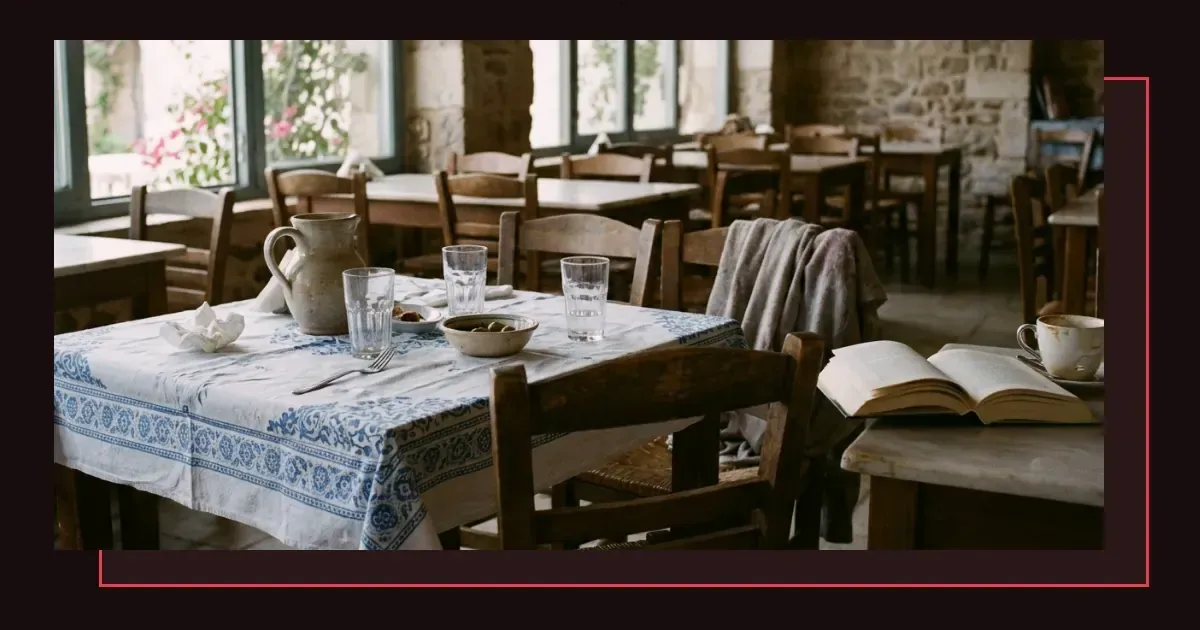
A taverna operates with minimal formality. Tables may lack reserved signs, and diners often seat themselves after a quick nod from the owner. The atmosphere prioritises ease over procedure, so choosing your own spot is rarely an issue.
Formal Greek restaurants follow a stricter pattern. A host greets arrivals, checks reservations, and assigns tables based on party size and availability. Requesting a different table is possible, but the decision rests with the host rather than the diner.
The distinction shows in the layout. Tavernas arrange tables close together, sometimes sharing edges, while formal venues space them to preserve privacy. One encourages spontaneity; the other demands coordination.
When self-seating is expected
In traditional tavernas, especially those outside tourist centres, self-seating is the norm. You walk in, scan the room, and take an empty table. Staff acknowledge your presence with a glance or a brief greeting, then bring menus once you've settled.
This approach works because the space is visible from the entrance. Tables sit in full view, making it clear which are occupied and which are free. No formal system is needed when everyone can see the situation at once.
The exception arises when a taverna is busy. If most tables are full and several parties are waiting, the owner may direct you to a specific spot to manage the flow. In that case, follow their lead.
Signs that self-seating applies
- No host station near the door
- Other diners walk directly to tables without pausing
- Staff are occupied with serving rather than greeting
- The dining area is a single open room with no partitions
How to request a specific table in a structured setting
When a host meets you at the door, state your preference early. Mention the table as soon as they suggest a spot: "Would it be possible to sit by the window instead?" or "Could we take that corner table?"
The host will either agree, offer an alternative, or explain why the table is unavailable. Reserved tables, larger parties expected later, or sections closed for the evening are common reasons. Accept the explanation without pressing further.
If the table you want is occupied but you're willing to wait, ask how long it might be. Some restaurants accommodate short waits; others prefer you take an available table immediately. The response tells you whether flexibility exists.
What improves your chances
Arriving early in the service period gives you more options. Mid-evening, most tables are spoken for, and staff have little room to manoeuvre. A polite tone and a clear reason help as well: "We'd prefer a quieter spot" or "The view from that table would suit our occasion."
Booking ahead and noting your preference in the reservation strengthens the request. The restaurant can plan for it rather than improvising when you arrive.
Outdoor seating and its own etiquette
Greek restaurants with outdoor tables treat them as a separate zone. In warm months, these seats fill first, and securing one often requires an explicit request or an early arrival.
Some venues reserve outdoor tables for diners who ask, while others operate on a first-come basis. If you want to sit outside, mention it when booking or as soon as you enter. Waiting until you're seated indoors makes moving less likely.
Weather plays a role. Even if outdoor tables are empty, staff may hesitate to seat you there if rain or wind is forecast. They're protecting you from an interrupted meal, not withholding a table arbitrarily.
Reading the room before asking
Observe how other diners arrived and were seated. If a host walked them to their table, expect the same process. If people wandered in and chose their own spots, you can do likewise.
The restaurant's size also matters. A small taverna with a handful of tables has less need for formal seating procedures. A large venue with multiple rooms relies on a host to distribute diners evenly and avoid overwhelming one section of the kitchen.
When in doubt, pause near the entrance and make eye contact with a staff member. Their response—a gesture toward the dining area or a step forward to greet you—clarifies whether you're expected to choose or be shown.
What to do if your preferred table isn't available
Accept the alternative without hesitation. The host knows which tables are about to turn over, which are reserved, and which sections are staffed at that moment. Pressing for a specific table delays both your seating and that of others waiting.
If your reason is practical rather than preferential—a mobility issue, a need for space for a pushchair, or a draft from an open door—explain it plainly. Staff can address a specific need more easily than a vague desire for a "better" table.
Once seated, give the table a chance. A spot that seemed less appealing from the entrance may suit you well once you're settled and the meal is underway. For practical advice on navigating other aspects of the meal, see how to handle bill splitting or what to do when service slows.
Steps to choosing your table confidently
- Pause just inside the entrance and look for a host or greeting point.
- If no one approaches within a few seconds and other diners are seated without guidance, choose an empty table yourself.
- If a host greets you, state any preference immediately: outdoor, quiet, near the window.
- Accept their recommendation if your first choice is unavailable, or ask about a brief wait if you're willing.
- Settle in without revisiting the decision once you're seated.
Common table types and what they offer
| Table type | Advantages | Considerations |
|---|---|---|
| Window or outdoor | Natural light, street views, fresh air | May be noisier, exposed to weather |
| Corner or alcove | Privacy, quieter, feels more intimate | Less visibility, may be further from service |
| Centre of the room | Quick service, easy to flag staff | More foot traffic, less seclusion |
| Near the kitchen | Faster access to hot dishes | Noise, staff movement, cooking smells |
When sharing a table becomes the custom
In very busy tavernas, particularly those popular with locals, you may be asked to share a larger table with another party. This practice, more common in Greece itself than in the UK, reflects the communal spirit of taverna dining.
Shared tables usually involve a clear physical boundary: plates and glasses stay on your half, and conversation remains within your group. It's proximity without intrusion, and most diners navigate it without difficulty.
If sharing a table doesn't suit your occasion, mention it when booking or upon arrival. Most restaurants will find you a private spot, though it may mean a longer wait or a less desirable location.
The unspoken signals of table choice
Greek restaurant culture reads intention through where you sit. A table near the door suggests a quick meal; a corner table implies a longer, more deliberate evening. Staff adjust their approach accordingly, so your table choice sets expectations before you've ordered.
Couples often gravitate toward smaller tables against walls, while groups take centre positions where chairs can be added easily. Solo diners frequently choose spots near windows or at the bar, where the setting feels less exposed.
These patterns aren't rules, but recognising them helps you choose a table that matches your plans. If you want a leisurely meal, avoid tables that feel transitional. If you're in a hurry, a spot near the door signals that to the staff. For more on navigating Greek restaurant customs, see why service feels relaxed.
Download PDF: Choosing your table at a Greek restaurant PDF, 28 KB
Further reading
Frequently asked questions
Can I move to a different table after being seated at a Greek restaurant?
You can ask, but it's best to do so immediately after sitting down and before the meal progresses. Staff are more likely to accommodate the request if the table is still unset and no food has been ordered. Moving mid-meal disrupts service and is rarely granted.
Do Greek restaurants in the UK follow the same seating customs as those in Greece?
UK Greek restaurants tend to adopt a more structured approach, with hosts guiding diners to tables even in casual settings. Traditional tavernas in Greece often allow self-seating, but this varies widely depending on the venue's size and location.
Is it rude to ask for a quieter table when the restaurant is busy?
It's not rude to ask, but be prepared for the request to be declined if no quieter tables are available. Phrasing it as a preference rather than a demand keeps the exchange polite, and staff will offer what they can within the evening's constraints.