Splitting the bill at a Greek restaurant: four practical approaches
 Save
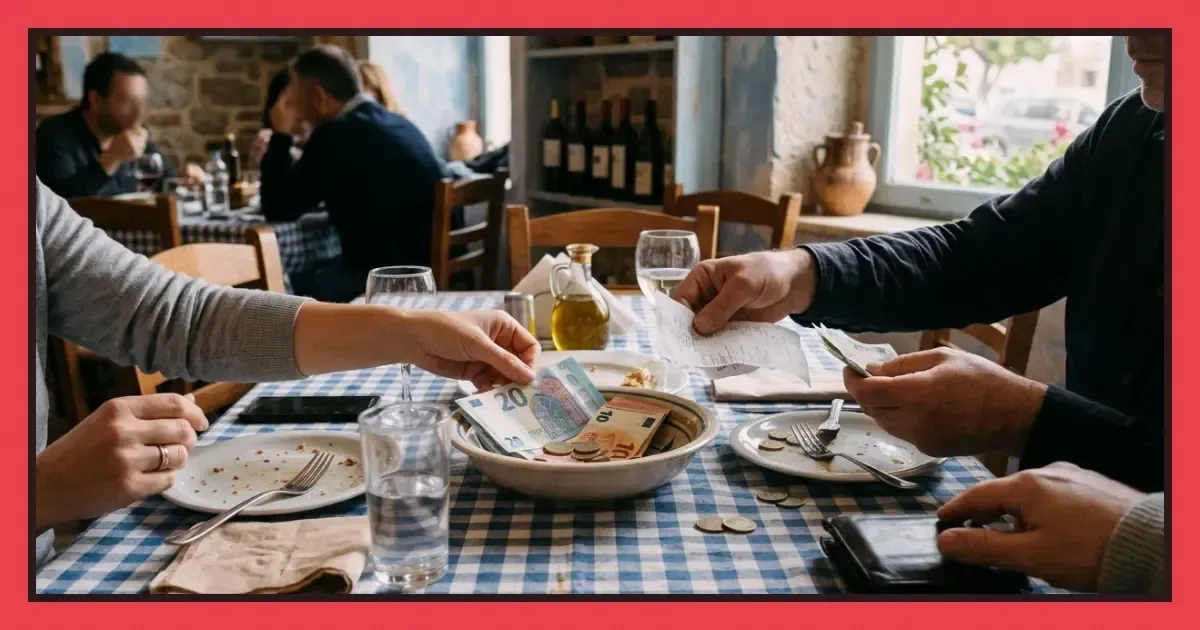
Splitting the bill at a Greek restaurant raises questions about custom, practicality and timing. Whether you're dividing costs equally, settling individual orders or working out who pays what in a group, the method matters — it shapes how smoothly payment goes and how welcome you feel in a space where dining is about more than food. Delphi Restaurant explores how to handle payment in different settings so you can focus on the meal.
Why payment feels different in Greek restaurants
Greek dining culture treats meals as social events, not transactions. A table often shares multiple dishes, passing plates around, and one person might order wine for the group while another picks the cheese. This fluidity makes bill-splitting less straightforward than in restaurants where everyone orders from their own menu.
In Greece itself, it's common for one person to pay the entire bill as an act of hospitality — and the gesture is understood as genuine, not a show. In UK Greek restaurants, that expectation is weaker, but the spirit remains: meals are communal, and payment is secondary to the gathering.
Understanding this context helps you approach splitting without awkwardness. Staff in Greek restaurants are used to payment questions; they expect them and handle them matter-of-factly.
Four ways to divide the bill
Equal split
The simplest method works when everyone has ordered similarly and the meal feels genuinely shared. Add up the total, divide by the number of people. This works best for small groups of two to four, where ordering patterns are close.
Individual bills
Ask the server at the start of the meal: "Can we have separate bills?" Most Greek restaurants say yes, and they'll track orders by person from the beginning. Payment then happens in separate transactions — straightforward and removes negotiation later. This method suits groups where some order wine and others don't, or appetites vary widely.
Calculate by person and shared items
When a group orders many small plates to share plus individual mains, split shared costs (starters, wine, bread) equally and add individual mains to each person's share. If three people share three meze plates and one person orders moussaka while two order fish, each person pays their share of the meze plus the cost of their own dish. The maths takes a moment, but it's fair and transparent.
One person pays, others settle directly
One person puts the entire bill on their card, then others transfer their share by phone payment or cash. This keeps the transaction simple at the table and avoids multiple cards being processed. Settle amounts beforehand so there's no confusion when drinks arrive or bills are split unevenly.
| Method | Best for | Timing |
|---|---|---|
| Equal split | Small groups with similar orders | Any time; works fastest at end of meal |
| Separate bills | Larger groups or mixed appetites | Mention at the start; prevents confusion |
| Shared items plus individual mains | Groups that order many starters and one main each | Calculate after the bill arrives |
| One pays, others settle | Any group; most flexible | Arrange amounts as the meal unfolds |
When to raise the payment question
Mention how you'll pay before ordering, not when the bill arrives. Tell the server early: "We're splitting this bill" or "We'd like separate bills." This sets expectations and prevents the awkwardness of asking after food has come.
If you didn't plan ahead, it's still fine. Ask the server as soon as the main courses arrive. They can note who ordered what for the final tally, or they can process multiple payments without fuss. Greek staff are familiar with the question.
Practical steps for splitting without friction
- Decide your method before ordering — equal split, separate bills, or one person pays first.
- Tell the server your plan when you order, or mention it when the first courses arrive.
- If calculating by person, ask for an itemised bill so you can see what belongs to whom.
- Use a phone calculator or payment app to work out shares quickly — don't do it in your head.
- Confirm the amount with each person before payment, not after surprises arrive.
- Settle up at the table if possible, so no one leaves the restaurant unsure of the outcome.
Common situations and how to handle them
Someone doesn't drink while others do
If one person orders water while others have wine, don't force equal splitting. Calculate individual mains and allocate wine to those who ordered it. A fair approach is to split soft drinks and water equally (they cost little) and let each person pay for their own alcohol.
A group orders many small plates
Meze-style meals with shared starters make splitting harder because no one ordered the hummus or the fried cheese individually. For this situation, add all shared-plate costs and divide by the group size, then add individual mains. It's transparent and feels fair. Ordering Greek food for a large group explores the dynamics of shared eating in more depth.
One person is visibly eating less
If someone orders a single small dish or just eats with others' plates, don't assume they owe less without asking. They might have eaten before coming, or they might prefer it that way. Address it directly in a friendly tone: "Do you want to cover your share differently?" Most people will clarify, and it removes tension.
You're in a larger group and want to avoid chaos
For a party of six or more, separate bills are your clearest option. Individual bills take slightly longer to process, but they remove all argument at the end. Alternatively, assign one person per two diners to be responsible for that pair's share, so you're splitting into smaller calculations instead of one large one.
Reading the bill and spotting mistakes
Greek restaurant bills are usually straightforward, but cover charges or service charges sometimes appear. Ask the server if you don't recognise a line. In UK restaurants, gratuity is never compulsory, so if a service charge appears, ask whether it's automatic or optional — and whether it's included in the total you're dividing.
If someone else's meal appears on your bill by mistake, flag it immediately. It happens, and it's easy to correct. Don't leave the table without checking the itemisation matches what you ordered.
When to offer to pay for someone's meal
If you've invited someone to the restaurant or if you're there as a host, it's normal to suggest covering their cost. A phrase like "This one's on us" is clear and generous without obligation. Don't put someone in an uncomfortable position by announcing you're paying their share after the fact — settle it early or ask directly.
If someone suggests paying for your meal and you'd rather split, say so plainly. "I'd rather go halves" or "Let's each pay our own way" is honest and prevents misunderstanding later.
Download PDF: Splitting the bill at a Greek restaurant: before you go PDF, 29 KB
Further reading
Frequently asked questions
Can you ask for separate bills at a Greek restaurant?
Yes, most Greek restaurants accept requests for separate bills without issue. Ask the server when you order or early in the meal so they can track who ordered what. It removes any confusion at payment time.
What does a cover charge at a Greek restaurant include?
A cover charge usually covers bread, butter and sometimes olives or another small dish brought to the table before you order. It's not compulsory everywhere, so check the menu or ask the server if it appears on your bill. It's rarely large enough to change how you split.
How do you handle splitting when people order very different amounts?
The fairest method is to calculate individual mains and share the cost of starters and communal items equally. If the difference is still significant, use a phone payment app or calculator to work out each person's exact share based on what they ordered.