Six items to skip at a Greek restaurant and what to order instead
 Save
Some dishes on a Greek restaurant menu look appealing but rarely deliver the experience you're hoping for. These items are either poorly executed outside Greece, priced beyond their worth, or simply not part of traditional Greek cooking. Delphi Restaurant walks you through the orders that disappoint and the alternatives that make the evening worthwhile.
Dishes marketed as Greek but rooted elsewhere
Hummus appears on many Greek restaurant menus, but it originates in the Middle East. Greek cuisine has its own spreads, and ordering hummus means missing them. Fava, a yellow split-pea purée, offers a creamy texture with olive oil and lemon. Melitzanosalata, made from roasted aubergine, delivers smokiness and depth.
Falafel follows the same pattern. It's not Greek, and the versions served in these settings are often dense and dry. Dolmades, vine leaves stuffed with rice and herbs, give you the hand-held satisfaction without the detour into another cuisine's territory.
The meze confusion
Restaurants sometimes bundle Middle Eastern and Greek items under one meze platter. The result is a selection that lacks focus. When the menu lists individual Greek spreads and dips, order those separately and build your own combination.
Fish billed by weight without clarity
Whole fish sold by weight can be excellent, but only when the restaurant states the price clearly before cooking. Without that figure, the bill becomes a surprise. Good practice means the server brings the fish to your table, names the weight and confirms the cost. Anything less is a warning.
Where pricing feels opaque, choose a dish with a fixed menu price. Grilled octopus, kalamarakia or baked prawns with feta all deliver seafood flavour without the guesswork. For more on what octopus brings to the table, see this guide to octopus texture and flavour.
Pre-made moussaka reheated to order
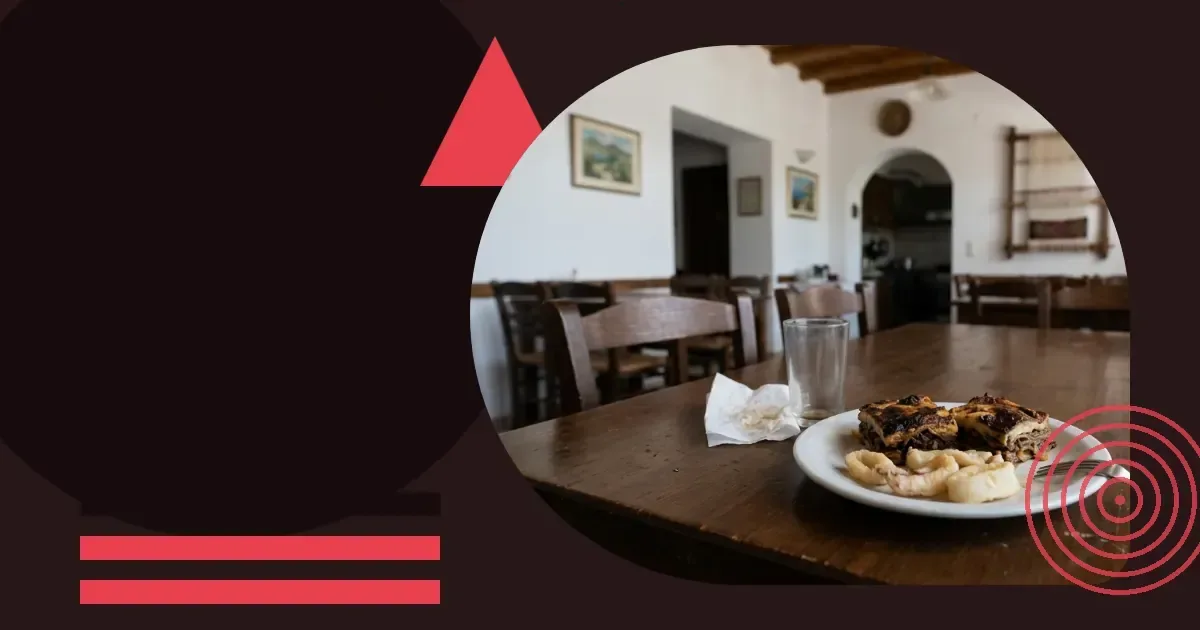
Moussaka takes time to prepare properly. Layered aubergine, minced meat, béchamel sauce and careful baking produce a dish that holds its shape and tastes balanced. Many restaurants make large trays in advance and reheat portions to order. The result is often watery, with separated sauce and mushy aubergine.
Ask whether moussaka is made fresh or reheated. If the answer is vague, pastitsio or a grilled meat dish will serve you better. Both hold up well and signal a kitchen working to order.
The béchamel test
Fresh moussaka has béchamel that sits firm on top, with defined edges when sliced. A reheated portion pools liquid on the plate and collapses when you cut into it. The difference is immediate.
Gyros on a sit-down menu
Gyros belongs to street food, where high turnover keeps the meat rotating and fresh. In a sit-down restaurant with a full menu, gyros meat often sits idle. The slices lose moisture, the edges dry out, and what arrives is chewy rather than tender.
Souvlaki, grilled to order, gives you the same satisfaction without the compromise. Lamb chops, pork skewers or chicken cooked over charcoal all deliver better texture and flavour.
Tourist-trap baklava served stale
Baklava should be crisp, with layers of phyllo that shatter when you press a fork through. Stale baklava turns soft and leathery, with syrup that tastes cloying rather than balanced. Restaurants that serve it from a display case rather than making it in-house rarely get it right.
Good baklava arrives on the day it's made. If the restaurant can't confirm that, galaktoboureko, a semolina custard wrapped in phyllo, or loukoumades, fried dough with honey, both have shorter timelines and hold up better.
Recognising fresh phyllo
Fresh phyllo is pale gold and audibly crisp. Stale phyllo looks dull, bends without breaking, and leaves an oily film on your fingers. The sound it makes when cut tells you everything.
Lamb described as slow-cooked but arriving tough
Slow-cooked lamb should pull apart with a fork. When it arrives chewy or stringy, the cooking time was cut short or the meat was reheated. Both shortcuts ruin the dish.
Kleftiko, lamb cooked in parchment, is the safer choice. The sealed parcel traps moisture and makes it harder to serve undercooked meat. Lamb chops grilled to order eliminate the slow-cook risk entirely.
Steps to navigate the menu with confidence
- Ask the server which dishes are made to order and which are prepared in advance.
- Check whether fish is priced by weight and request the total cost before agreeing.
- Look for items that appear on multiple tables, a signal the kitchen is making them in volume and getting them right.
- Read the descriptions carefully; words like "homemade" and "fresh" should apply to that dish, not just the restaurant's general approach.
- When a dish disappoints, note what went wrong so you can address it calmly and effectively.
Comparison of weak choices and their alternatives
| Item to skip | Reason | Better alternative |
|---|---|---|
| Hummus | Not Greek; misses authentic spreads | Fava or melitzanosalata |
| Weight-priced fish (unclear cost) | Surprise billing | Fixed-price grilled octopus or prawns |
| Reheated moussaka | Watery, separated layers | Pastitsio or grilled meat |
| Gyros in sit-down restaurants | Dry, low turnover | Souvlaki or lamb chops |
Spotting a menu built for volume over quality
Menus that run to several pages, covering Greek, Italian and generic Mediterranean dishes, signal a kitchen stretched thin. Specialisation matters. A shorter menu suggests the chef is confident in fewer dishes and making them well.
Generic descriptions without Greek terms are another warning. A menu that reads "spinach pie" rather than spanakopita or "cheese platter" instead of naming the cheeses often points to a restaurant catering to tourists who won't ask questions. For more on separating authentic establishments from those built for passing trade, see this guide to tourist-trap warning signs.
The photograph test
Photographs on the menu itself are common in tourist areas and rare in restaurants serving locals. The images promise more than the kitchen delivers. A text-only menu, especially one that changes with the season, is a better indicator.
Timing and preparation transparency
Good restaurants answer questions about how a dish is prepared without defensiveness. Asking whether something is made to order or cooked in advance is reasonable, and a kitchen with nothing to hide will tell you plainly.
Where servers deflect or give vague answers, trust the uncertainty. Transparent kitchens want you to know their process. Opaque ones rely on you not asking.
When portion size signals a shortcut
Greek restaurant portions are generally generous, but certain dishes should carry more heft than others. A small serving of moussaka or pastitsio, both labour-intensive, often means the restaurant is rationing a dish that didn't turn out well or trying to stretch limited stock.
Grilled items and salads scale naturally. Baked casseroles and slow-cooked meats don't. When a traditionally large-format dish arrives in a noticeably small portion, the kitchen is making a choice. For context on what to expect across different dish types, this article on portion sizes offers useful comparisons.
#Meze #Moussaka #Seafood #Souvlaki
Download PDF: Greek restaurant ordering checklist: avoid disappointment PDF, 28 KB
Further reading
Frequently asked questions
Which dishes should I avoid at a Greek restaurant if I want authentic food?
Skip hummus and falafel, as both are Middle Eastern rather than Greek. Reheated moussaka and gyros served in sit-down restaurants also rarely deliver the quality you're hoping for. Choose Greek spreads like fava, grilled souvlaki and dishes made to order instead.
How can I tell if a Greek restaurant is reheating dishes instead of cooking them fresh?
Ask the server which dishes are made to order. Look for watery sauces, collapsed layers in moussaka, and meat that's chewy rather than tender. A transparent kitchen will answer your questions directly; vague responses are a warning sign.
Why is fish priced by weight sometimes a problem at Greek restaurants?
When the restaurant doesn't state the total cost before cooking, you may face an unexpectedly high bill. Always ask for the weight and final price upfront. If the server can't or won't provide it, choose a fixed-price seafood dish instead.