Octopus at Greek restaurants: texture, flavour and what shapes your first bite
 Save
Octopus at a Greek restaurant tastes mild and faintly sweet, with a firm texture that yields without being chewy when cooked properly. The flavour comes less from the octopus itself than from how it's prepared: char from the grill, lemon brightness, olive oil richness. Delphi Restaurant exists to help diners in the UK understand what awaits them at Greek tables, and octopus is one dish where knowing what to expect changes the experience entirely.
The flavour profile
Octopus carries almost no fishiness. The taste sits somewhere between shellfish and white fish, leaning closer to squid but with more substance. What registers first is a gentle brininess, then a faint sweetness that lingers without ever becoming strong. Most of the flavour you notice comes from what surrounds the octopus: olive oil, lemon juice, oregano, sometimes a vinegar-based marinade.
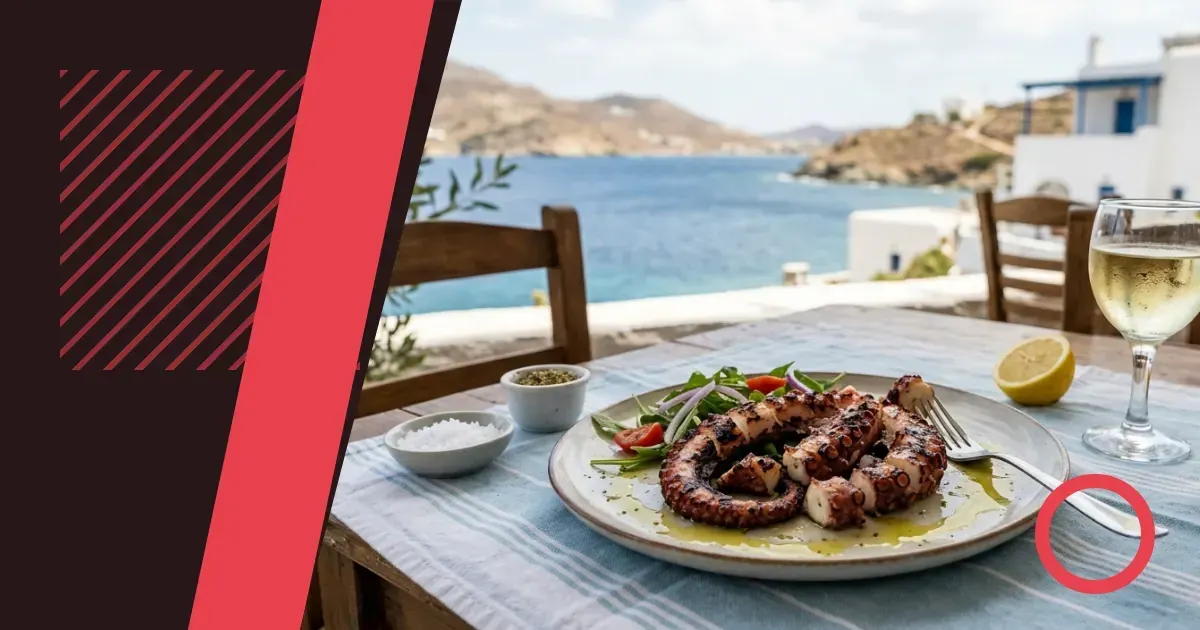
Grilled octopus picks up smoke and char, which adds depth without masking the seafood underneath. When boiled and served as part of meze, the flavour stays cleaner and relies more on the dressing. Either way, octopus acts as a canvas for Greek seasoning rather than competing with it.
Texture and tenderness
Texture separates well-cooked octopus from the rubbery disaster people fear. Done right, it's firm but tender, with a slight spring when you bite down. The outside often carries a crisp edge from the grill, while the inside stays moist. Each piece pulls apart cleanly without requiring a knife.
Poorly cooked octopus turns tough and chewy, resisting your teeth and bouncing back. This happens when it's undercooked or cooked too fast at high heat without the slow braising or boiling step that breaks down the muscle fibres. A Greek kitchen that knows octopus will simmer it low and slow before finishing it on the grill, and the difference shows in every bite.
What affects the bite
Three factors shape the texture:
- Size of the pieces – larger chunks retain more moisture and feel more substantial; thin slices dry out faster and can turn leathery if overcooked.
- Preparation method – boiling followed by grilling gives the most reliable tenderness; grilling from raw demands precision and often results in uneven texture.
- Resting time – octopus benefits from cooling slightly after cooking, which firms up the flesh and makes it easier to slice evenly.
Three common preparations
Greek restaurants serve octopus in forms that highlight different aspects of its texture and flavour.
| Preparation | Texture | Flavour emphasis |
|---|---|---|
| Grilled (sta karvouna) | Firm with charred edges | Smoke, olive oil, lemon |
| Boiled and dressed | Tender throughout | Vinegar, herbs, brine |
| Stewed (stifado) | Soft, almost melting | Wine, tomato, onion |
Grilled octopus arrives as thick tentacle sections with visible char marks, often brushed with olive oil and scattered with oregano. Boiled octopus appears in smaller pieces, dressed simply and served at room temperature as part of a meze spread. Stewed octopus is less common but deeply savoury, braised until the flesh barely holds together.
Your first order
If octopus is new to you, follow these steps to make the experience easier:
- Ask whether the octopus is grilled or boiled – grilled gives you char and texture contrast; boiled keeps it milder and more approachable.
- Start with a shared portion rather than a main course – octopus often comes as part of meze, which lets you try a few pieces without committing to a full plate.
- Look at the menu for words like "tender" or "slow-cooked" – these signal a kitchen that understands the preparation.
- Pair it with lemon – a squeeze cuts through the richness and lifts the flavour without overwhelming the seafood.
What to watch for on the plate
A well-prepared piece of octopus shows clean edges, not ragged tears. The colour ranges from pale grey-pink to deep burgundy depending on the cooking method, with grilled pieces displaying dark brown char in spots. The flesh should glisten slightly from olive oil but never sit in a pool of liquid.
Pairing and accompaniments
Octopus sits comfortably alongside other meze or as a prelude to grilled fish. It works with crisp white wine, particularly Assyrtiko, which has enough acidity to match the lemon and enough body to stand up to the char. Ouzo is traditional but can overpower the mild flavour if you're still learning to appreciate both.
On the plate, octopus often arrives with capers, red onion slices and a drizzle of extra virgin olive oil. Some kitchens add fava, the split-pea purée, which provides a creamy contrast to the firm seafood. If your meal includes horiatiki salad, the acidity from the tomatoes and the brininess from the feta echo the octopus without clashing.
Signs of quality
Not all octopus on a Greek menu comes from a skilled kitchen. Watch for these indicators before ordering:
- The menu specifies "fresh" or "charcoal-grilled" rather than just listing "octopus" with no detail.
- Other diners have it on their tables, which suggests it's a regular item rather than an afterthought.
- The restaurant is near the coast or known for seafood, where octopus turnover stays high and the kitchen has practice.
Frozen octopus is not inherently inferior – freezing can actually tenderise the flesh – but it needs careful handling. A kitchen that brines or marinates before grilling shows attention to technique. If the restaurant takes care with other ingredients, that care likely extends to the octopus.
When it doesn't work
Octopus can fail in predictable ways. Rubbery texture means insufficient cooking time or skipping the slow simmer. A strong fishy taste suggests the octopus wasn't fresh or sat too long after cooking. Dryness comes from overcooking or reheating without added moisture.
If your first bite disappoints, squeeze more lemon over it – acid can soften the perception of toughness and brighten flavour. If that doesn't help, move on to another dish rather than forcing your way through. Greek menus offer enough variety that one misstep needn't define the meal, and you have options when something doesn't land.
Building confidence
Octopus intimidates less once you've tried it. The flavour is gentle, the texture is manageable when cooked well, and the preparation is straightforward enough that a competent Greek kitchen reliably gets it right. Start with a small portion, notice what the char and lemon contribute, and let the experience shape whether you order it again.
Many diners find octopus becomes a favourite precisely because it doesn't shout. It pairs well, it doesn't fill you up too quickly, and it feels unmistakably Greek without requiring an acquired taste. If your hesitation comes from not knowing what awaits, now you do: mild, firm, lightly sweet, and shaped by smoke and citrus.
#Octopus #Seafood #Meze #Grilled fish
Download PDF: Ordering octopus at a Greek restaurant: your confidence checklist PDF, 30 KB
Further reading
Frequently asked questions
What does grilled octopus taste like compared to other seafood?
Grilled octopus tastes milder than most fish, with a faint sweetness and almost no fishiness. The flavour sits between squid and white fish, but firmer in texture. Most of what you taste comes from the char, olive oil and lemon rather than the octopus itself.
Is octopus chewy at Greek restaurants or does it have a different texture?
Properly cooked octopus is firm but tender, with a slight spring when bitten. It should not be chewy or rubbery. Greek kitchens that know octopus simmer it slowly before grilling, which breaks down the muscle and prevents toughness.
What should I order with octopus if I'm trying it for the first time at a Greek restaurant?
Order octopus as part of a meze selection rather than a main course, which lets you try a few pieces without committing. Pair it with a crisp white wine like Assyrtiko and squeeze fresh lemon over it to lift the flavour.